
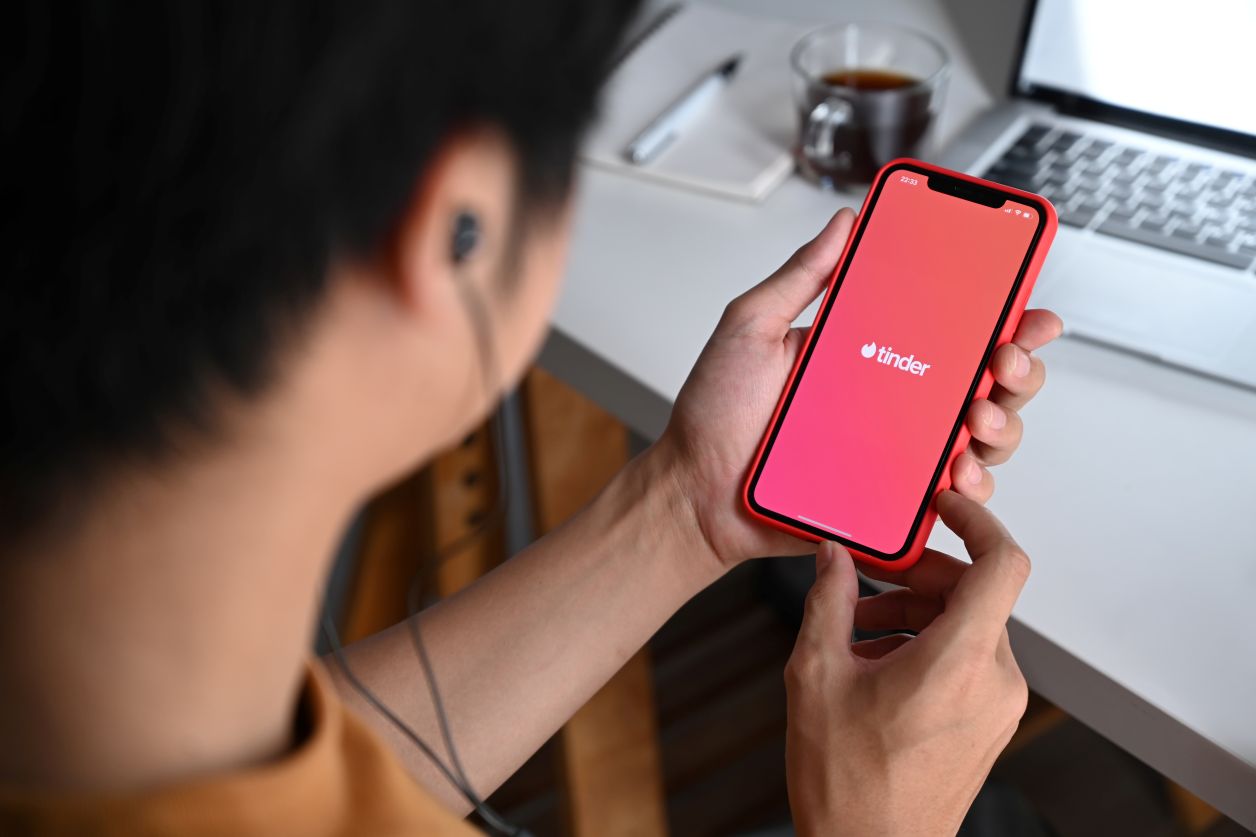
Tinder has been one of the most popular dating apps in recent years, incorporating a “hot-or-not” design through quick swiping “yes” or “no” reactions to prospective partners. Known for a culture of hooking up and one-night stands, many researchers are interested in the effect Tinder has on its users and their sexual behaviors.
A group of Spanish researchers have looked into a non-sexual aspect of Tinder: self-perception. Self-perception is someone’s behavior and the way they present themselves, which is often influenced by social and cultural norms, as well as personal and social values. The assumption about online self-perception is that an individual will always present a controlled version of themselves that is curated to make a good impression.
The researchers dug through 1,000 Tinder profiles from users in the Barcelona, Spain area, analyzing each image included to identify the self-presentation choices of users. They then compared by age, gender, and sexual orientation.
Self-presentation clusters:
- Half portrait (24%): half of the body included in the image; user is looking at the camera.
- Casual poser (16%): the user is looking away in the image (candid, millennial “edgy” selfie, etc.).
- Close-up (14%): selfies with only the head visible, looking at the camera.
- Full portrait (13%): full body is in view; user is looking at the camera.
- Sunglasses (10%): the user is wearing sunglasses.
- Nature lover (8%): the user is in nature (fish, hiking, etc.).
- Nothing to hide (7%): users are almost naked, high degree of nudity, also includes swimsuits.
- Screensaver (5%): no person included in the image, mainly landscapes or screenshots.
- A bit of myself (3%): parts of the body in frame (no head visible), with a high degree of nudity.
It should be noted that only 10% of the sample included nudity in their Tinder profile. Nudity was calculated using Yahoo’s Not Safe for Work (NSFW) scale.
Popular clusters by gender
Researchers state that these patterns of self-perception may be in-line with cultural and social norms, as well as other research. Specifically, we see more conservative expressions of self online.
- Women tended to have higher amounts of nudity, especially in the first image, although this may be due to Tinder’s smart select option (the first image shown is dictated by which image is on the screen when other users swipe “yes”),
- Women searching for men tended to fall in the full portrait cluster,
- Women searching for women tended to include more casual and close-up images (avoiding full portrait images),
- Men included less nudity,
- Men searching for men tended to have more nothing to hide, and half portrait images (avoiding screensaver, bit of self, and close-up images),
- Men searching for women were more likely to include images from the screensaver and nature lover clusters (avoiding nothing to hide).
Popular clusters by sexual orientation
These behaviors may be more closely aligned with cultural expectations in Spain, as well as within the LGB community:
- Straight women and men fell more into the clusters of full portrait and screensaver, respectively.
- Bisexual individuals appeared to include more nudity in their images, but no other clear pattern of image preference.
- Gay men tended to include more half portrait and nothing to hide images, avoiding the screensaver cluster.
- Lesbian women had a high number of images in the sunglasses cluster, avoiding full portrait images.
Popular clusters by age
Younger age groups had the highest nudity index, which decreased as users were older. Younger age groups also tended to include more images in the clusters: nothing to hide and casual, avoiding sunglasses, close-ups, and screensavers. This falls in line with current observations about social media behaviors.
Researchers found that as age increased, less exposure was desired. So, older groups may be more likely to have majority of images be in the screensaver cluster. Researchers believe this connects to ideas about body image and nervousness showing aging bodies online or to strangers.
Key Takeaways
- Most Tinder users present themselves conservatively, similar to general social media norms.
- Self-presentation varies by gender and orientation, aligning with cultural expectations and community norms.
- Younger users are more comfortable showing skin, aligning with broader social-media trends.
The majority of users sampled (67%) made their profiles up of more conservative image types: half portrait, casual poser, close-up, and full portrait. Researchers believe this reveals most Tinder users prefer to casually show others what they look like, with no hint of wanting to engage in sexual activity right away (contrary to popular understandings of Tinder).
The generalizations made in this study were based on extensive analysis and should not be used to discriminate against or harm another individual based on gender, age, or sexuality.
References
García-Alamán, A., Blanco-Cuaresma, S., & Montesano, A. (2025). Stereotypical love: A cluster analysis of self-presentation strategies in tinder profile pictures. The Journal of Sexual Medicine, 22(11), 2082–2095. https://doi.org/10.1093/jsxmed/qdaf245
You may also be interested in...
SMSNA Patients
How Often Are Dating Apps Used for Casual Sex? New Study Explains Key Factors
October 15, 2024Other Popular Articles

What Is the Average Penis Size?
If you have ever wondered how your penis compares to others in terms of size, you are not alone. Many men are curious to know how their penises stack up compared to the average. Unfortunately, general curiosity can sometimes give way to full-on obsession and anxiety about penis size. This can be an unhealthy and often unnecessary fixation, especially because most men who think their penises are too small have perfectly normal-sized penises.

Can Sex Reduce Menstrual Cramps?
The SMSNA periodically receives and publishes ‘guest editorials.’ The current article was submitted by Mia Barnes, a freelance writer and researcher who specializes in women's health, wellness, and healthy living. She is the Founder and Editor-in-Chief of Body+Mind Magazine.
Having sex while you experience menstrual cramps is healthy and can provide significant benefits. While it might not be the first activity that comes to mind when your PMS or period cramping begins, many people enjoy sex to reduce menstrual cramps, experience increased pleasure and benefit from other advantages. Learn more about having sex while menstrual cramps are happening and how it can help your body.

What Is Sensate Focus and How Does It Work?
Sensate focus is a technique used to improve intimacy and communication between partners around sex, reduce sexual performance anxiety, and shift away from ingrained, goal-oriented sexual patterns that may not be serving a couple.

What Is Jelqing, and Does It Actually Work?
The term “jelqing” refers to a set of penis stretching exercises that some believe can make the penis bigger. Although the practice has gained attention and popularity in blogs and internet forums in recent years, there is no scientific evidence that it is an effective way to permanently increase the size of one’s penis. In fact, in some cases, jelqing may actually cause damage to the penis, so it is a good idea to get all the facts before setting off to try it.

How Long Does It Take the Average Man to Ejaculate?
On average, it takes a man between 5 to 7 minutes to orgasm and ejaculate during sexual intercourse.

Can Sex Throw off Your Vaginal pH Balance?
The SMSNA periodically receives and publishes ‘guest editorials.’ The current article was submitted by Mia Barnes, a freelance writer and researcher who specializes in women's health, wellness, and healthy living. She is the Founder and Editor-in-Chief of Body+Mind Magazine.
Your vagina is a pretty powerful organ. It is a pathway for menstrual blood and babies. It also is a main player in sexual intercourse. You might hear about your vagina’s pH and worry that yours is at risk. Here’s what to know about vaginal pH, including the impacts sex could have.
Attention: Restrictions on use of SMSNA content in third party applications, including artificial intelligence technologies, such as large language models and generative AI.
You are prohibited from using or uploading content you accessed through this website into external applications, bots, software, or websites, including those using artificial intelligence technologies and infrastructure, including deep learning, machine learning and large language models and generative AI.