
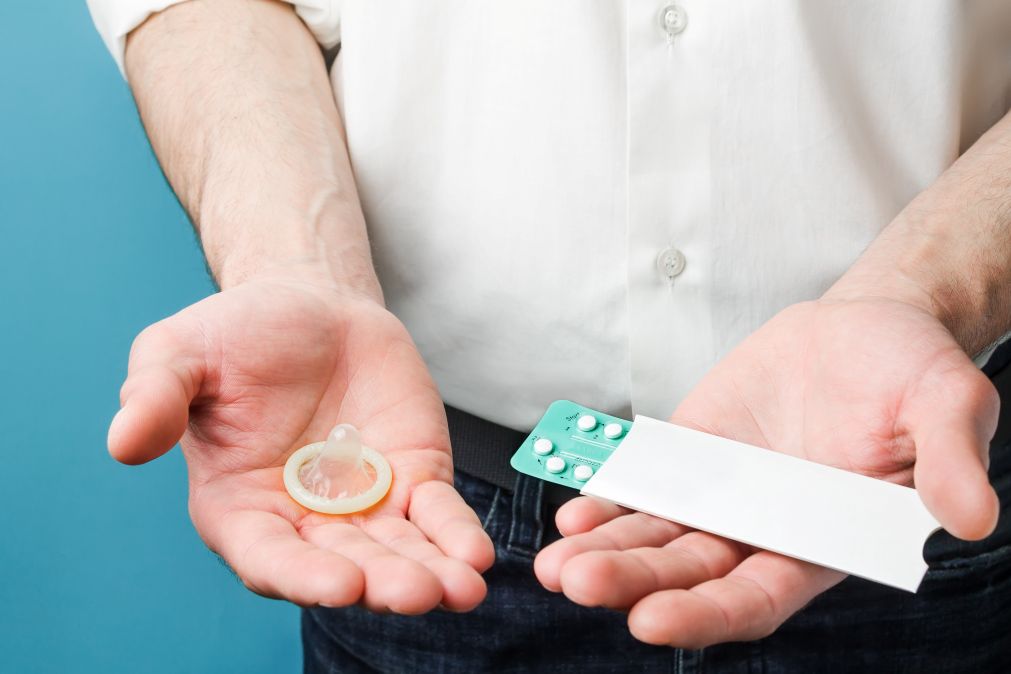
Globally, around 44% of pregnancies are unintended. Of these, about two-thirds were due to not using contraception, or using unreliable methods (pull-out, etc.). This tends to place women at risk for harmful procedures that may have otherwise been avoided. The issue lies with the burden of prevention primarily being placed on women, usually in the form of hormonal birth control options that may not be the best for every woman.
Currently, the only accepted forms of male birth control include condoms or vasectomies, which come with their own considerations. Vasectomies are safe, minimally invasive, and while they can be reversible, some do not want to risk the instance in which it is not. Condoms are not 100% effective at preventing pregnancy and are preventative against sexually transmitted infections (STI’s).
A recent study has revealed that a majority of men (78%) believe both partners should share the burden of contraception and family planning equally. So, the question stands: are there any other options besides these two?
Hormonal Male Birth Control
Sexual health professionals and endocrinologists have been researching hormonal male birth control for quite a while now. Any external hormone supplementation leads to a reduction in natural testosterone production. Sperm requires testosterone produced in the testicles to mature; therefore, any reduction in natural testosterone will decrease sperm count.
The problem researchers have run into is with the side effects and effectiveness of these medications. The majority of current trials involve monthly injections, which have been successful in reducing sperm count, but the men involved have mentioned discomfort at the injection sites.
Other options that have been tested include topical gels, applied to the shoulders, as well as pills, both as a daily dose (like female birth control pills). While these trials have also been successful, some concerns have been raised over the associated side effects.
Current side effects for these hormonal options are actually very similar to those of female hormonal birth control:
- Weight gain,
- Mood changes,
- Depression,
- Changes in libido (sexual desire),
- Acne,
- Abnormal liver function.
Additionally, when men stop using birth control, there is often a period of low testosterone with associated symptoms while testosterone production gradually recovers. Re-gaining sperm production is neither immediate nor guaranteed, and many men require several months (some over a year) to return to their original level of fertility, if full recovery occurs at all.
However, despite being deemed effective at suppressing sperm production by researchers, all forms of male birth control currently being tested have not been recommended due to these side effects.
Other Important Notes
There is one gel medication (as of 2025) that recently completed the first two phases of U.S. Food and Drug Administration trials but is still under investigation. It should be noted that no hormonal male birth control has made it past the third phase of clinical trials.
Additionally, there are a few non-hormonal birth control options available for men that may be minimally invasive and reversible, but not as invasive as a vasectomy. These commonly include creating blockages in the vas deferens (tubes that bring sperm to the penis) via injection. It must be mentioned that none of these have made it through clinical trials.
Key Points
- The only two currently approved and widely accepted forms of male birth control include condoms and vasectomies – neither of which provide complete satisfaction to both sexual partners.
- Hormonal male birth control appears to be effective, with side effects similar to their female counterparts.
- More testing and adjustments are needed to ensure these methods will not cause long-term infertility.
- So far, all other options for male birth control have not made it through regulating clinical trials – none are approved for prescription or commercial use.
- Research into more male birth control options continues to be in motion.
Resources
Abbe, C. R., Page, S. T., & Thirumalai, A. (2020). Male Contraception. The Yale journal of biology and medicine, 93(4), 603–613.
Louwagie, E. J., Quinn, G. F. L., Pond, K. L., & Hansen, K. A. (2023). Male contraception: Narrative review of ongoing research. Basic and Clinical Andrology, 33(1). https://doi.org/10.1186/s12610-023-00204-z
Myer, K. (2025, February 18). Study of Daily Application of Nestorone® (NES) and Testosterone (T) Combination Gel for Male Contraception. Clinicaltrials.gov. https://clinicaltrials.gov/study/NCT03452111#study-record-dates
U.S. Department of Health and Human Services. (2022, August 2). Spotlight: One Year and counting: Male birth control study reaches milestone. Eunice Kennedy Shriver National Institute of Child Health and Human Development. https://www.nichd.nih.gov/newsroom/news/080222-NEST#
You may also be interested in...
SMSNA Patients
Testosterone-Replacement Therapy Is Safe for Cardiovascular Health, According to New Study
August 8, 2023SMSNA Patients
Is Oral Testosterone Safe and Effective for Men With Low Testosterone?
January 24, 2023Did You Know?
What Is the Connection Between Low Testosterone and COVID-19 Hospitalizations?
October 11, 2022SMSNA
Rethinking Testosterone Replacement Therapy in Men With Prostate Cancer
May 11, 2022SMSNA Patients
PSA and Total Testosterone Levels in Men With Prostate Cancer
April 26, 2022SMSNA Patients
Testosterone May Play a Role in COVID-19, Says New Research
July 13, 2021SMSNA Patients
A Possible Future Treatment Option for Male Hypogonadism
April 6, 2021SMSNA
Diagnosing Testosterone Deficiency in Men
June 10, 2021Other Popular Articles

What Is the Average Penis Size?
If you have ever wondered how your penis compares to others in terms of size, you are not alone. Many men are curious to know how their penises stack up compared to the average. Unfortunately, general curiosity can sometimes give way to full-on obsession and anxiety about penis size. This can be an unhealthy and often unnecessary fixation, especially because most men who think their penises are too small have perfectly normal-sized penises.
Can Sex Reduce Menstrual Cramps?
The SMSNA periodically receives and publishes ‘guest editorials.’ The current article was submitted by Mia Barnes, a freelance writer and researcher who specializes in women's health, wellness, and healthy living. She is the Founder and Editor-in-Chief of Body+Mind Magazine.
Having sex while you experience menstrual cramps is healthy and can provide significant benefits. While it might not be the first activity that comes to mind when your PMS or period cramping begins, many people enjoy sex to reduce menstrual cramps, experience increased pleasure and benefit from other advantages. Learn more about having sex while menstrual cramps are happening and how it can help your body.

What Is Sensate Focus and How Does It Work?
Sensate focus is a technique used to improve intimacy and communication between partners around sex, reduce sexual performance anxiety, and shift away from ingrained, goal-oriented sexual patterns that may not be serving a couple.

What Is Jelqing, and Does It Actually Work?
The term “jelqing” refers to a set of penis stretching exercises that some believe can make the penis bigger. Although the practice has gained attention and popularity in blogs and internet forums in recent years, there is no scientific evidence that it is an effective way to permanently increase the size of one’s penis. In fact, in some cases, jelqing may actually cause damage to the penis, so it is a good idea to get all the facts before setting off to try it.

How Long Does It Take the Average Man to Ejaculate?
On average, it takes a man between 5 to 7 minutes to orgasm and ejaculate during sexual intercourse.
Can Sex Throw off Your Vaginal pH Balance?
The SMSNA periodically receives and publishes ‘guest editorials.’ The current article was submitted by Mia Barnes, a freelance writer and researcher who specializes in women's health, wellness, and healthy living. She is the Founder and Editor-in-Chief of Body+Mind Magazine.
Your vagina is a pretty powerful organ. It is a pathway for menstrual blood and babies. It also is a main player in sexual intercourse. You might hear about your vagina’s pH and worry that yours is at risk. Here’s what to know about vaginal pH, including the impacts sex could have.
Attention: Restrictions on use of SMSNA content in third party applications, including artificial intelligence technologies, such as large language models and generative AI.
You are prohibited from using or uploading content you accessed through this website into external applications, bots, software, or websites, including those using artificial intelligence technologies and infrastructure, including deep learning, machine learning and large language models and generative AI.