
Patients may have questions about their options for managing and treating Peyronie’s disease. According to most urological societies, providers are advised to inform patients of their options to the fullest extent possible. Meaning, informing patients about risks, benefits, and efficacy of each option available, whether they’re experimental or not. In order to inform patients to the fullest extent, it’s important to know about each available option. This article intends to outline the basics of each option, including potential risks, benefits, and efficacy, with regard to AUA and CUA recommendations.
Non-Surgical Options
Only a few non-surgical practices have been approved by both the AUA and CUA for clinical use. Multimodal methods should be considered for better chances of efficacy.
- Collagenase intralesional injections have a moderate recommendation. This involves injecting through the most acute area of fibrous plaque, laterally, accompanied by both clinician manual modelling, and at-home modelling. This method should only be recommended for patients with a curvature over 30°, with good erectile function a stable disease state, and the presence of non-calcified plaque on ultrasounds. Potential complications include penile bruising, swelling, pain, failure of treatment, and (very rarely) corporal rupture. Generally, this method has resulted in patient satisfaction rates of about 50-67% and can result in improved curvature, but not necessarily improved length.
- Verapamil injections have a weak, conditional recommendation. Some studies have shown some potential benefits to curvature and pain while others have not shown much improvement. There are fewer studies available, but it is generally a well-tolerated procedure with limited side effects such as penile bruising and swelling.
- Penile traction has a Grade C recommendation by the CUA and is included in the AUA’s Core Curriculum on Peyronie’s Disease as a reasonable clinical trial option. This involves the patient wearing a device for a minimum of 30-90 minutes per day, typically for about 3 months, although there is no standardized method. If patients cannot fully commit, then it is not recommended that they use this method. This may be recommended for those in both the acute and chronic phases of Peyronie’s disease, but found to be most helpful when used early, and best when used in combination with other methods. Most studies have reported an average improvement in curvature of roughly 33%, with patients reporting improvements in penile length, curvature, and successful sexual intercourse with no adverse effects.
Surgical Options
All surgical options are well-informed with moderate recommendations by both the AUA and CUA. Surgery is the most consistent way to fully straighten the penis, but surgery does have the potential for side effects. Also, some patients prefer to exhaust less invasive options before considering surgery and others may not be willing to consider surgery at all. Surgery is generally considered when patients are in the stable or chronic phase.
- Penile plication is best for patients with good erectile function and pre-operative penile rigidity without medication, and with an uncomplicated curve between 30° and 60° with no significant deformity. Patients should be aware that this surgery may reduce the perceived length of their penis in matching the length of the shortened side, as well as present the potential for penile instability, pain, persistence or recurrence of curve, hematoma, urethral injury, and/or sensory loss. Patients should avoid sexual activity for 4-6 weeks after surgery.
- Plaque incision or excision with grafting is best for patients with normal erectile function with or without medication, complex penile curvature of less than 60°, large plaque(s), short penile length, and other deformities. Post-operatively, patients may need assistance via vacuum erection devices, PDE5 inhibitors, and penile traction to help minimize loss of length and potential resulting erectile dysfunction. Other complications may include infection requiring graft removal, hematoma, pain, and recurrence of curvature.
- Penile prosthesis placement is recommended for Peyronie’s disease when significant erectile dysfunction is present. The prosthesis may be performed in combination with other procedures such has manual modeling (bending), plication, or incision/grafting. Providers should establish if patients would prefer a completely straight penis, or if the functionally straight measurement of 20° is acceptable. Patients should be aware of complications such as infection, mechanical failure, and risk of corporal perforation. Generally, penile curvature should improve over time with repeated activation of the device.
Conclusion
It’s important to be aware of the endorsed options available to patients seeking therapy or management of Peyronie’s disease. Some methods are more effective and have stronger recommendations than others. Be wary of those that are still in clinical trial phases and always be sure to inform patients of this factor, as well as of any complications that accompany their options. Inform patients about their options based on clinical assessments and disease progression, as not all options are suitable for all patients.
References:
2018 Canadian Urological Association guideline for Peyronie’s disease and congenital penile curvature. View of 2018 Canadian Urological Association guideline for Peyronie’s disease and congenital penile curvature. (2018). https://cuaj.ca/index.php/journal/article/view/5255/3656
Peyronie’s Disease (2015). Peyronie’s disease guideline - american urological association. (2015). https://www.auanet.org/guidelines-and-quality/guidelines/peyronies-disease-guideline
Sandean, D. P., Leslie, S. W., & Lotfollahzadeh, S. (2024, October 6). Peyronie disease. StatPearls [Internet]. https://www.ncbi.nlm.nih.gov/books/NBK560628/
You may also be interested in...
Blog
Early Signs of Peyronie’s Disease and When to Seek Help
April 30, 2026SMSNA Patients
Neurostimulator Implants May Help with Erectile Dysfunction in Men with Spinal Cord Injuries
June 4, 2026Did You Know?
Testicular Torsion vs. Epididymitis: What's the Difference?
August 26, 2025SMSNA Patients
New AI Assessment Tool for Peyronie’s Disease
July 22, 2025Did You Know?
What Causes Painful Ejaculation?
April 1, 2025SMSNA Patients
Options for Managing the Penile Prosthesis Reservoir During Revision Surgery
February 11, 2025Did You Know?
What Is the Typical Recovery Process After Inflatable Penile Prosthesis Surgery?
October 1, 2024Blog
How Does Gender-Affirming Care Impact Sexual Satisfaction in Transgender Individuals?
November 19, 2024SMSNA Patients
The SMSNA’s Position on Cosmetic Penile Enhancement Procedures
July 9, 2024Other Popular Articles
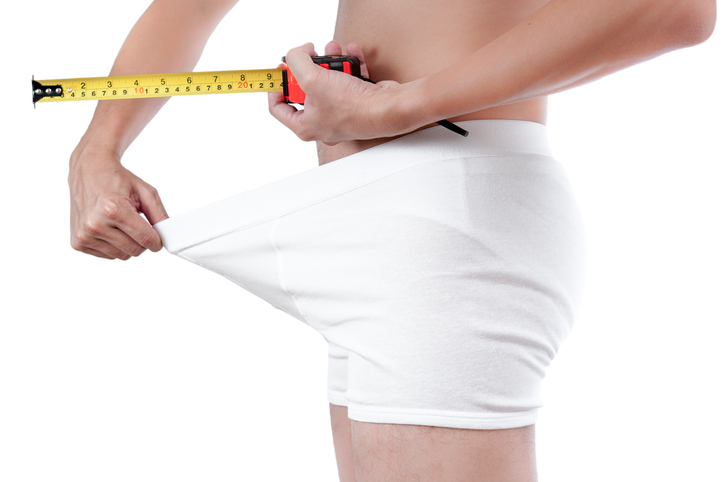
What Is the Average Penis Size?
If you have ever wondered how your penis compares to others in terms of size, you are not alone. Many men are curious to know how their penises stack up compared to the average. Unfortunately, general curiosity can sometimes give way to full-on obsession and anxiety about penis size. This can be an unhealthy and often unnecessary fixation, especially because most men who think their penises are too small have perfectly normal-sized penises.

Can Sex Reduce Menstrual Cramps?
The SMSNA periodically receives and publishes ‘guest editorials.’ The current article was submitted by Mia Barnes, a freelance writer and researcher who specializes in women's health, wellness, and healthy living. She is the Founder and Editor-in-Chief of Body+Mind Magazine.
Having sex while you experience menstrual cramps is healthy and can provide significant benefits. While it might not be the first activity that comes to mind when your PMS or period cramping begins, many people enjoy sex to reduce menstrual cramps, experience increased pleasure and benefit from other advantages. Learn more about having sex while menstrual cramps are happening and how it can help your body.

What Is Sensate Focus and How Does It Work?
Sensate focus is a technique used to improve intimacy and communication between partners around sex, reduce sexual performance anxiety, and shift away from ingrained, goal-oriented sexual patterns that may not be serving a couple.

What Is Jelqing, and Does It Actually Work?
The term “jelqing” refers to a set of penis stretching exercises that some believe can make the penis bigger. Although the practice has gained attention and popularity in blogs and internet forums in recent years, there is no scientific evidence that it is an effective way to permanently increase the size of one’s penis. In fact, in some cases, jelqing may actually cause damage to the penis, so it is a good idea to get all the facts before setting off to try it.

How Long Does It Take the Average Man to Ejaculate?
On average, it takes a man between 5 to 7 minutes to orgasm and ejaculate during sexual intercourse.
Can Sex Throw off Your Vaginal pH Balance?
The SMSNA periodically receives and publishes ‘guest editorials.’ The current article was submitted by Mia Barnes, a freelance writer and researcher who specializes in women's health, wellness, and healthy living. She is the Founder and Editor-in-Chief of Body+Mind Magazine.
Your vagina is a pretty powerful organ. It is a pathway for menstrual blood and babies. It also is a main player in sexual intercourse. You might hear about your vagina’s pH and worry that yours is at risk. Here’s what to know about vaginal pH, including the impacts sex could have.
Attention: Restrictions on use of SMSNA content in third party applications, including artificial intelligence technologies, such as large language models and generative AI.
You are prohibited from using or uploading content you accessed through this website into external applications, bots, software, or websites, including those using artificial intelligence technologies and infrastructure, including deep learning, machine learning and large language models and generative AI.
Subscribe for our Newsletter!