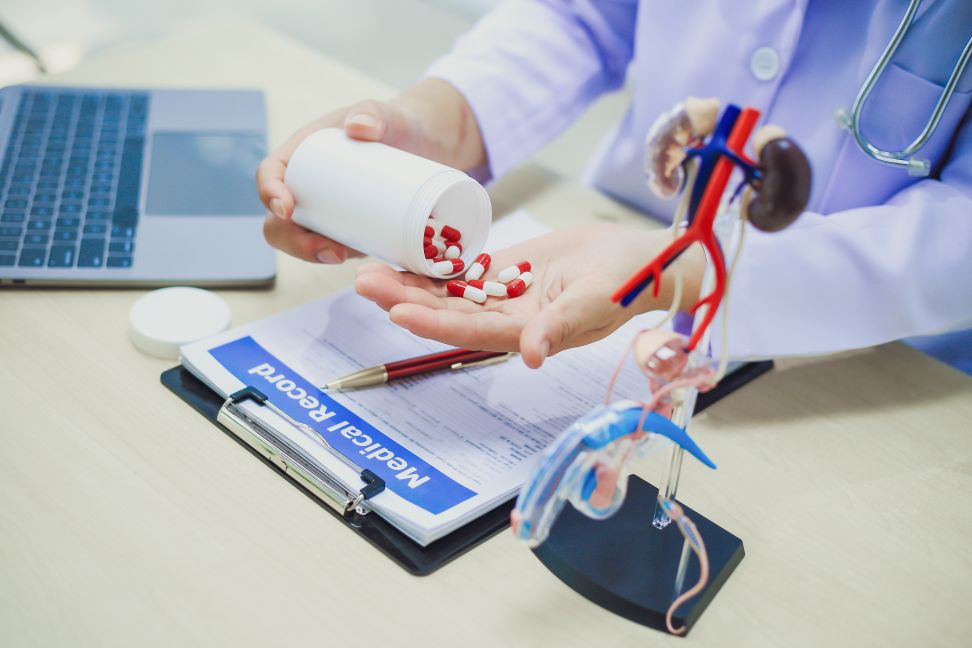
Peptides are naturally occurring chains of amino acids, which have been used for health and wellness treatments. The current most popular peptides are glucagon-like peptide 1 class (GLP-1s), although gonadotropin-releasing hormone (GnRH) agonists and antagonists have been in use for prostate cancer management since the 1980s and 2000s, respectively.
The U.S. Food and Drug Administration (FDA) will be deciding in July 2026 regarding the safety status of peptides. This article aims to discuss what patients may be hearing about their safety and efficacy before asking their providers.
The Popularity of Peptides
These drugs were often sold in compound pharmacies, with rising popularity amongst social media influencer “gym bros” and “wellness gurus.” These semi-public figures are sometimes commissioned by brands to advertise their product as safe and effective, without much knowledge of the ingredients and efficacy.
On public forum websites such as Reddit or Quora, questions regarding peptides for weight loss, muscle gain, hair growth, etc., are asked daily in subgroups revolving around non-pharmaceutical methods for health and wellness – including penile growth. Many times, these will be sold in the category of supplements and come as a gummy, pill, drink mix packet, or injection.
Peptides are not necessarily dangerous; however, they are far from perfect. In 2023, the FDA listed 19 peptides as unsafe to be dispensed by compounding pharmacies. The decision was made based on the understanding that injectable peptides can cause immune reactions and that peptides have a lack of data supporting safety. This listing led to a shift where wellness companies, multilevel marketing groups, and other “gray market” sellers gained a small monopoly over these substances.
Currently Accepted Peptides in Sexual Health and Erectile Function Management
The only FDA-approved peptide for sexual dysfunction at present is designed to treat hypoactive sexual desire disorder (HSDD) in premenopausal women. Vyleesi (bremelanotide/PT-141) improves sexual desire by acting as a melanocortin-4 receptor agonist, activating the system that controls sexual arousal.
In men, PT-141 would work similarly and is different from phosphodiesterase-5 inhibitors (PDE5-i) in that there is no involvement of vasodilation or nitric oxide. In phase II clinical trials, PT-141 has had positive effects on erectile function, although adverse events include flushing, nausea, hypertension, and increased blood pressure. Currently, the use of PT-141 in men is off-label and experimental.
A few other peptides are being studied for their efficacy in treating sexual dysfunction. However, these are still on the list of unsafe peptides by the FDA. Patients asking about these options should be made aware that they are not FDA-approved and experimental if used. Patients should be aware of the recorded adverse events and be counseled on all available options for sexual dysfunction management.
Key Takeaways
- Peptides are naturally occurring amino acid chains that activate as an immune response.
- Several peptides have been placed on the FDA's “unsafe” list, meaning compounding pharmacies will be penalized for selling them.
- This leaves peptides up to the natural remedy supplement gray market, laying the stage for unsafe and unregulated use.
- A decision will be made by the FDA in July 2026 to reverse this listing and make these peptides available for compounding pharmacies again.
- Peptides are a topic of conversation on social media and online public forums, creating a rise in popularity and use.
- Bremelanotide/PT-141 is the only FDA-approved peptide for sexual dysfunction, approved for HSDD in premenopausal women.
- This has been used off-label for erectile dysfunction management.
- Providers should be aware of this discourse and be able to counsel patients properly on the potential negative effects and lack of efficacy trials for treating sexual dysfunction.
Resources
Burchfiel, E., Mills, N., Saffati, G., Low, E., Beck, A., Boyne, A. M., Fleming, B., Hernandez, B., Oppenheimer, A., Lipshultz, L. I., & Khera, M. (2025). (349) therapeutic peptides in sexual medicine: A narrative review. The Journal of Sexual Medicine, 22(Supplement_4). https://doi.org/10.1093/jsxmed/qdaf320.344
Damon, A. (2026, April 3). An FDA Reversal on Peptides Could Open the Market to Unsafe Drugs. ProPublica. https://www.propublica.org/article/peptide-safety-fda-compounding-pharmacies
El-Achkar, A., Boyne, A. M., & Lipshultz, L. I. (2026, April 16). Peptides for Sexual Dysfunction: What Clinicians Should Know. AUA News. https://auanews.net/issues/articles/2026/april-2026/peptides-for-sexual-dysfunction-what-clinicians-should-know
Ila, V., Pozzi, E., Gamage, M., & Ramasamy, R. (2025). Intravenous peptides and amino acids for erectile dysfunction: A narrative review of current applications and Future Directions. Expert Opinion on Pharmacotherapy, 26(5), 631–637. https://doi.org/10.1080/14656566.2025.2478912
Somani, S., Jain, S. S., Sarraju, A., Sandhu, A. T., Hernandez-Boussard, T., & Rodriguez, F. (2024). Using large language models to assess public perceptions around glucagon-like peptide-1 receptor agonists on social media. Communications Medicine, 4(1). https://doi.org/10.1038/s43856-024-00566-z
Steinzor, P. (2026, April 16). FDA to Convene Expert Panel on Expanding Access to Peptides Amid Safety, Regulatory Debate. AJMC. https://www.ajmc.com/view/fda-to-convene-expert-panel-on-expanding-access-to-peptides-amid-safety-regulatory-debate
You may also be interested in...
Did You Know?
What Women Need to Know About Pain During Sex
November 15, 2022Did You Know?
How Did STI Rates Change During the First Year of the COVID-19 Pandemic?
August 2, 2022Did You Know?
The Facts About Vaginal Health and Feminine Hygiene
January 11, 2022SMSNA
Disorders of Ejaculation Guideline Highlights for APPs
June 9, 2022SMSNA Patients
New Survey Reveals Men Prefer Telemedicine
October 19, 2021Did You Know?
Why Does Sex Hurt?: A Guide for Figuring Out What Might Be Causing Painful Sex
June 22, 2021SMSNA
Online Treatments for Male Sexual Dysfunction in the Time of COVID-19
October 22, 2021SMSNA Patients
Low-Intensity Shockwave Therapy May Be Beneficial for Women With Provoked Vestibulodynia
February 23, 2021Blog
An Overview of Concealed Penis
February 16, 2021Other Popular Articles

What Is the Average Penis Size?
If you have ever wondered how your penis compares to others in terms of size, you are not alone. Many men are curious to know how their penises stack up compared to the average. Unfortunately, general curiosity can sometimes give way to full-on obsession and anxiety about penis size. This can be an unhealthy and often unnecessary fixation, especially because most men who think their penises are too small have perfectly normal-sized penises.

Can Sex Reduce Menstrual Cramps?
The SMSNA periodically receives and publishes ‘guest editorials.’ The current article was submitted by Mia Barnes, a freelance writer and researcher who specializes in women's health, wellness, and healthy living. She is the Founder and Editor-in-Chief of Body+Mind Magazine.
Having sex while you experience menstrual cramps is healthy and can provide significant benefits. While it might not be the first activity that comes to mind when your PMS or period cramping begins, many people enjoy sex to reduce menstrual cramps, experience increased pleasure and benefit from other advantages. Learn more about having sex while menstrual cramps are happening and how it can help your body.

What Is Sensate Focus and How Does It Work?
Sensate focus is a technique used to improve intimacy and communication between partners around sex, reduce sexual performance anxiety, and shift away from ingrained, goal-oriented sexual patterns that may not be serving a couple.

What Is Jelqing, and Does It Actually Work?
The term “jelqing” refers to a set of penis stretching exercises that some believe can make the penis bigger. Although the practice has gained attention and popularity in blogs and internet forums in recent years, there is no scientific evidence that it is an effective way to permanently increase the size of one’s penis. In fact, in some cases, jelqing may actually cause damage to the penis, so it is a good idea to get all the facts before setting off to try it.

How Long Does It Take the Average Man to Ejaculate?
On average, it takes a man between 5 to 7 minutes to orgasm and ejaculate during sexual intercourse.
Can Sex Throw off Your Vaginal pH Balance?
The SMSNA periodically receives and publishes ‘guest editorials.’ The current article was submitted by Mia Barnes, a freelance writer and researcher who specializes in women's health, wellness, and healthy living. She is the Founder and Editor-in-Chief of Body+Mind Magazine.
Your vagina is a pretty powerful organ. It is a pathway for menstrual blood and babies. It also is a main player in sexual intercourse. You might hear about your vagina’s pH and worry that yours is at risk. Here’s what to know about vaginal pH, including the impacts sex could have.
Attention: Restrictions on use of SMSNA content in third party applications, including artificial intelligence technologies, such as large language models and generative AI.
You are prohibited from using or uploading content you accessed through this website into external applications, bots, software, or websites, including those using artificial intelligence technologies and infrastructure, including deep learning, machine learning and large language models and generative AI.
Subscribe for our Newsletter!